4 · Briefing
Before you come up
The road, the shuttles, the cold, the clothes and the beds. Everything you need for one night on a mountain, in one page.
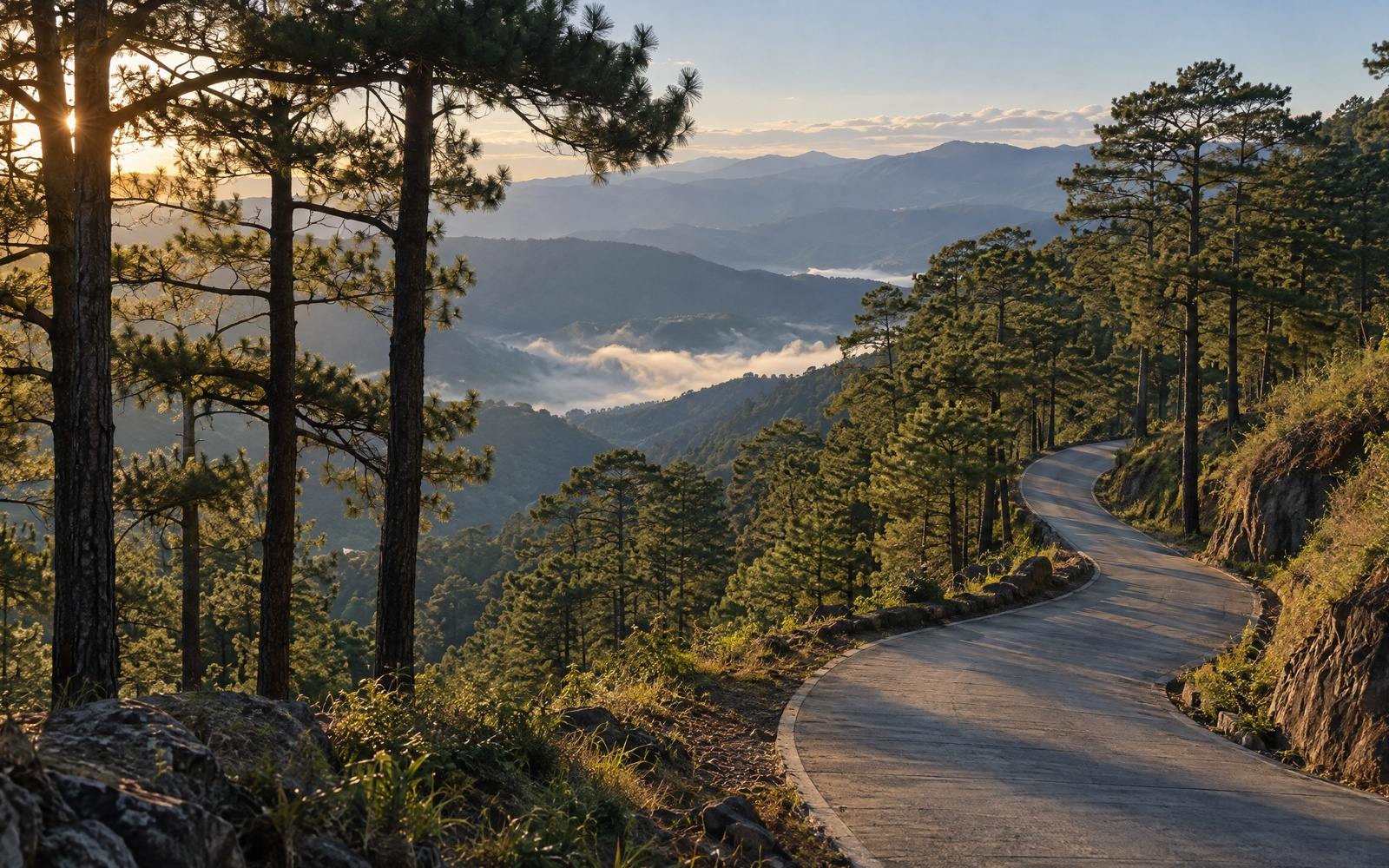
The road up
Baguio to the observatory
- First shuttle up from Baguio. About an hour and a quarter to the gate.
- Second shuttle up. The last one that reaches the deck before the vows.
- The deck opens. A warm drink at the railing.
- The last shuttles down, after the arch. Back in Baguio a little before one.
Driving yourself? The last stretch is steep and narrow and there are few places to park at the top. Please take the shuttle.
The ridge, from above
Where everything is
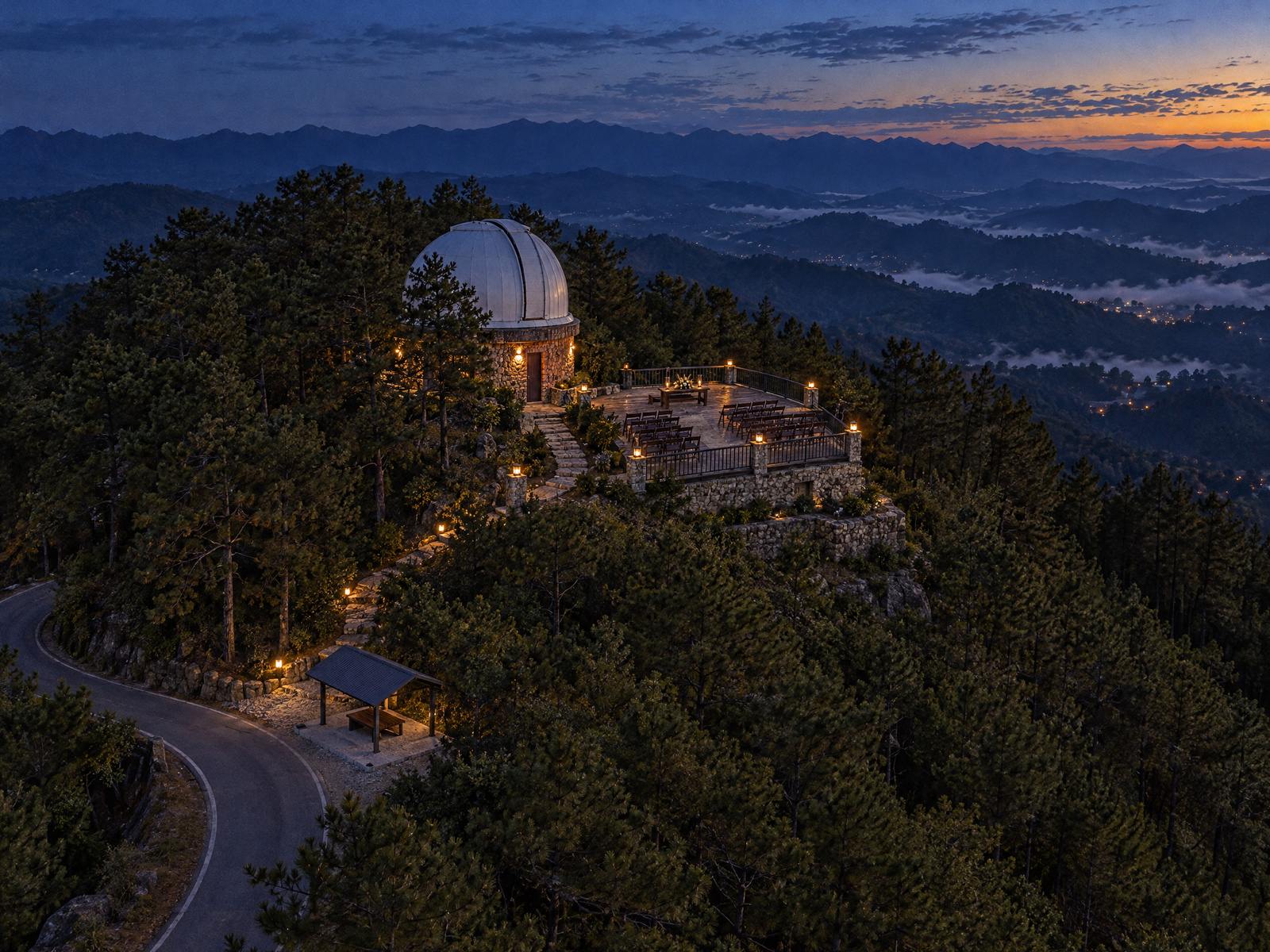
- The road’s last bend. The steep part, just below the top.
- The shuttle stop. A roofed bench at the turn, where every shuttle sets down and picks up.
- The path up. Stone steps through the pines, lit by low lamps.
- The dome. The feast, the dancing, and the door the arch begins from.
- The deck. The vows at dusk, facing west over the ridges.
- The terrace. The stone below the deck, where the telescopes stand.
A photograph of an invented place, made for this design study. Nothing here is a real observatory.
The cold, the clothes and the beds
The cold
The mountain after dark
Up here an October night is cold, colder than Baguio below, and the terrace is open to the wind. Bring a proper coat for after dinner, and shoes you can stand on a stone terrace in.
The dress code
Formal, and a little metal
Dark formal clothes, with something that catches the light: a silver tie, a gold shawl, a pin, a cuff. Under the arch, everyone’s sword will pick it out.
Where to stay
Down in Baguio
There are no rooms on the ridge. Stay in Baguio the night before and the night after, near the shuttle stop. The couple will send the stop’s address with your crew pass.
At the top
Lamps, not torches
The observatory keeps its lamps low and amber so eyes can adjust to the dark. Please leave phone torches off on the terrace: the telescopes, and everyone looking up, will thank you.
The whole site in the observatory’s dim amber, the way astronomers keep their eyes dark.