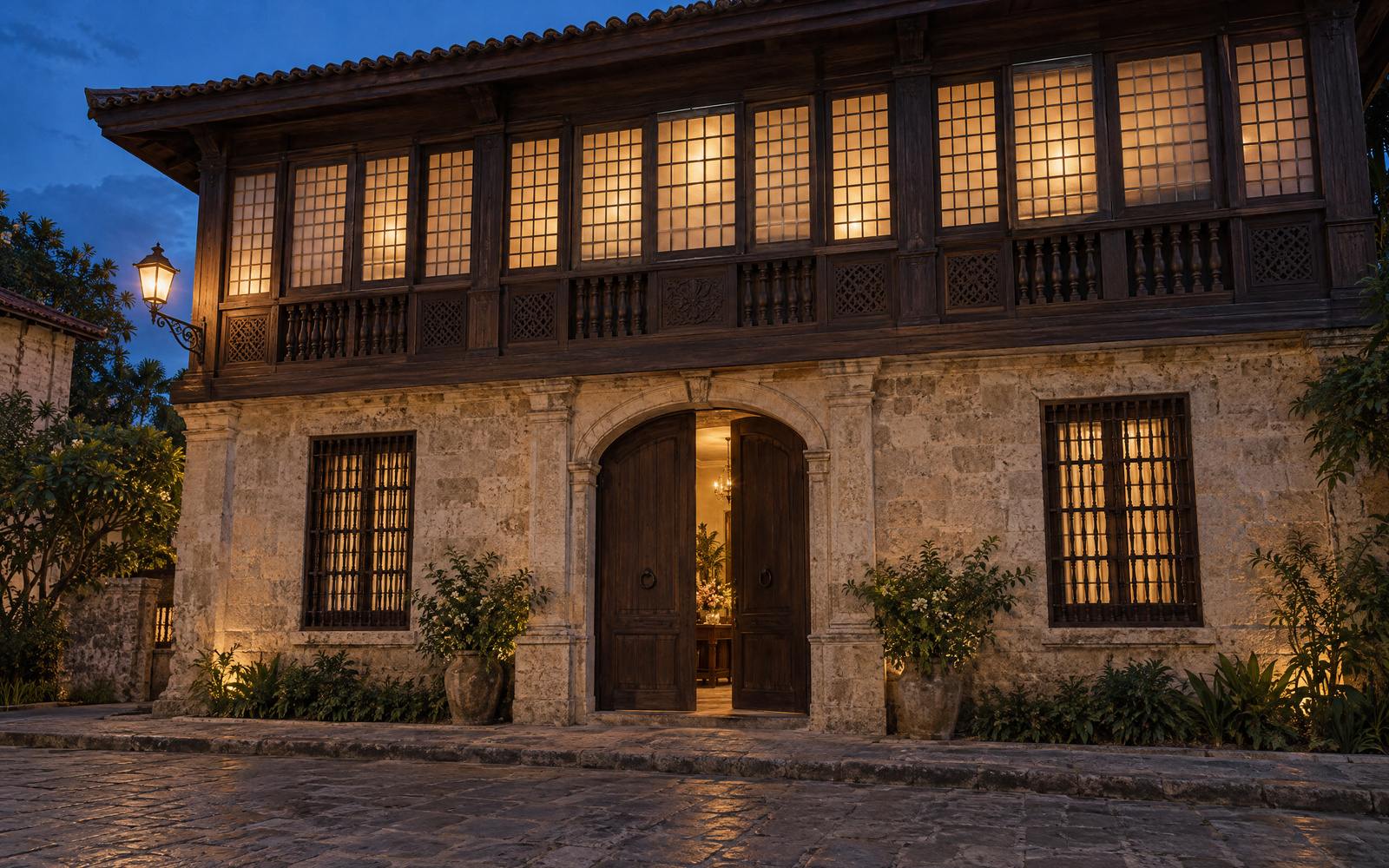
Taal is a heritage town in Batangas: old stone-and-wood houses on narrow streets,
about two and a half hours south of Manila. Here is how to get there, what to wear in the May heat, and where to stay.
The house
Casa Marilag
A bahay na bato on Taal’s heritage street: a ground floor of stone, an upper floor of
narra and capiz. Come in through the zaguan, the big wooden doors on the street. The patio is straight ahead, the
stairs to the azotea and the sala on your left.
Casa Marilag is invented for this design study; Taal is real.
Getting there
From Manila, about two and a half hours by car, down SLEX and the STAR Tollway; your map
will take you the rest of the way. Leave by noon: the Saturday traffic out of the city is the slow part.
The heritage street is narrow. Park in the lot behind the house (enter from the side
street); a valet waits at the zaguan from three.
The heat
Late May in Batangas is the hottest part of the year, low thirties in the afternoon. The
patio is in the house’s shade from half past three, there are fans and cold calamansi at the door, and the sala’s
windows open to the evening breeze after sunset.
Filipiniana
Gentlemen: a barong in piña, jusi or light cotton, untucked over dark trousers. No jacket,
and nobody will expect one.
Ladies: a terno, a baro’t saya, or any dress with butterfly sleeves; a modern dress
with a Filipiniana touch is just as welcome. Leave ivory to Malaya.
The house asks one thing: no stiletto heels on its old narra floors. Block heels or flats.
Sampaguita leaf
Narra
Capiz pearl
Piña cream
Staying over
Taal has a few small inns in its old houses, and Lipa and Batangas City have hotels about
forty minutes away. Book early: May is also the season of town fiestas.
While you are in Taal
Try the kapeng barako, the strong local coffee, and panutsa, the peanut brittle; take
home a piece of Taal embroidery. The family will tell you where.
Children
Very welcome. There is a quiet room off the sala with mats and a lola or two to watch them.